As from today on, after careful debate and in the light of the constant changing world economics (shipping costs, custom taxes, etc.), we are launching a new line of digital releases. Music that has been on the waiting list for a physical release but the harsh reality caught us in speed. We sincerely hope you’ll follow us in our vision and adapting to the circumstances around us but we want to keep our label alive and haven for the unique in free improvisation, avantgarde and free jazz alive and this is currently the way to proceed. Each digital release comes in a stylish design, featuring the breathtaking photography of MARTINA VERHOEVEN. Thank you.
BENEDICT TAYLOR & DIRK SERRIES – GEOMETRIC FOLKLORE (nwoj0070, A New Wave Of Jazz)
GEOMETRIC FOLKLORE is Benedict Taylor (viola) and Dirk Serries (guitar)’s third duo collaboration. After their OBSIDIAN album for Creative Sources, they returned to the magnificent Oude Klooster chapel to record/perform this next phase in their ongoing duo dialogue. And growth is clearly noted, two long form improvised pieces touching upon slightly different themes and tonalities. Perhaps a bit less abstract that what we heard on their previous two albums and deliberately more harmonic and with a strict interplay between the two kindred spirits, re-inventing the folklore as you will.
Benedict Taylor – viola Dirk Serries – archtop guitar
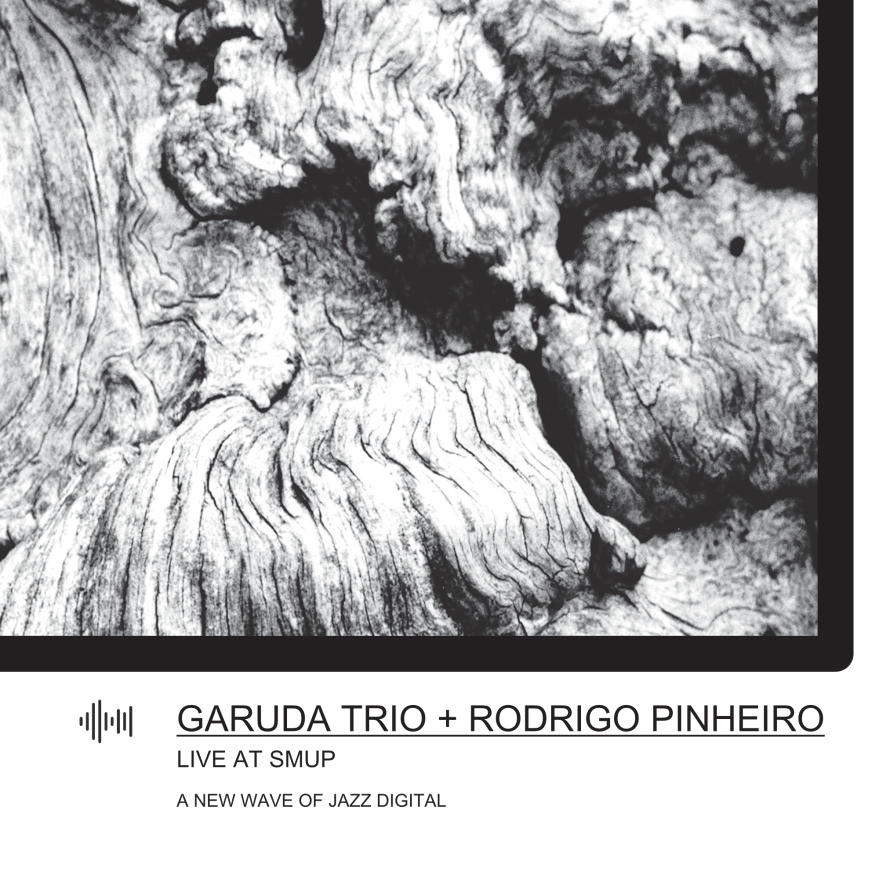
GARUDA TRIO + RODRIGO PINHEIRO – LIVE AT SMUP (nwoj0071, A New Wave Of Jazz)
Hugo Costa travelled back to his native country Portugal (he currently lives in The Netherlands) to play with some of his favorite musicians. Their GARUDA TRIO doesn’t play often live because of the distance. After their acclaimed album ’TONGUES OF FLAMES‘ featuring RODRIGO PINHEIRO , they set for playing the legendary SMUP venue. Due to the miscalculation in the schedule, their concert was troubled by the rehearsals of a big band in the basement. The quartet of Hugo Costa (alto sax), João Valinho (drums), Hernãni Faustino (double bass) and Rodrigo Pinheiro (piano) decided to amp up the volume and dynamics to at least match or even overpower the sound of the rehearsal band. The concert became a celebration of life, injected with fire, heart, drama and joy, making the quartet grow as an unity. And proud to release this excellent concert on A New Wave Of Jazz digital.
Hugo Costa – alto saxophone Rodrigo Pinheiro – piano Hernâni Faustino – double bass João Valinho – drums
UK’s Musique Machine just reviewed two of our latest releases with a 4 out of 5 stars rating for the LEMADI TRIO album. Both albums are of course available from our shop on bandcamp.
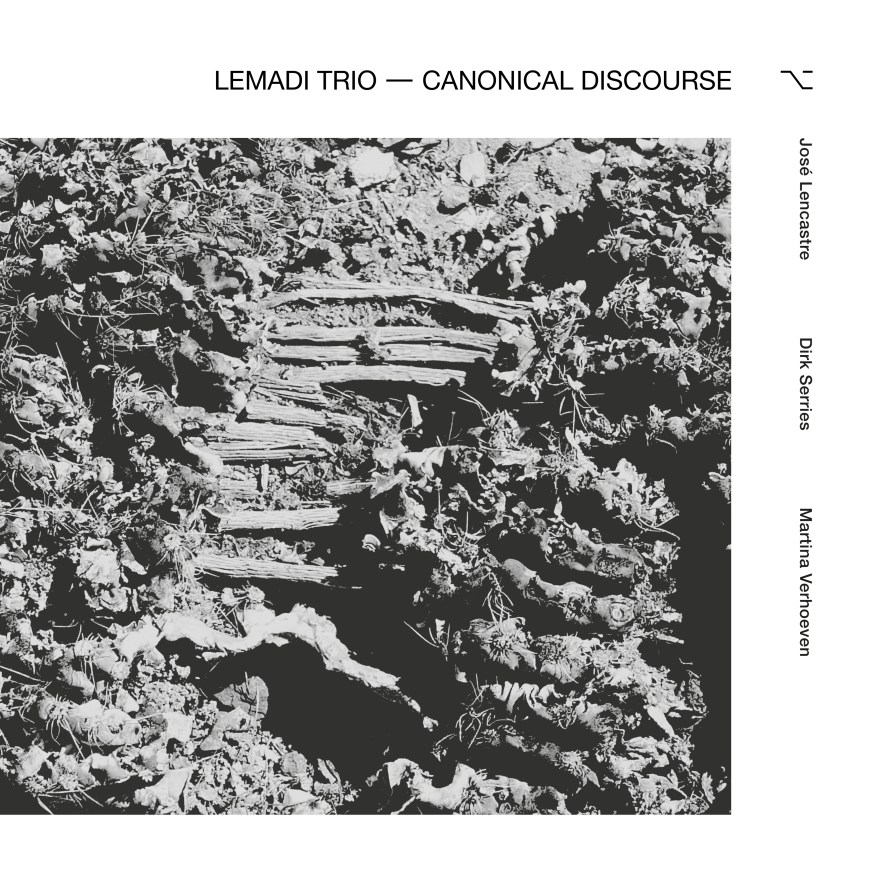
“4 out of 5 stars rating ! Canonical Discourse is a four-track journey into taut, tense, and largely angular improv. It’s a release that wonderful shifts and awkwardly shambles along- through the jarring, discordant, noisy and intense. The CD/ digital release appears on New Wave Of Jazz, and features two of the label’s key players- Dirk Serries who curates/ runs the label, and his wife Martina Verhoeven- he plays archtop guitar and she plays the grand piano. They are joined on alto sax by José Lencastre. Each of the four tracks has runtimes between eleven and fifteen-minute mark- with each of them having a fair bit of rewarding shift/ movement within their length. We open with the track “Detached Mode” which moves from taut maps of fluttering hisses, bounding piano hits, and guitar scarp ‘n’ manic pick. Onto slowly churning hazes of steadily horn fork ‘n’ boil, gloomy piano clunk, and broodingly guitar jangle/ clutter. As we move through the album we come to the longest track “Disjunction”. It opens with a jagged trail of manic neck picks, squawking horn tone, and bass-bound piano clunk ‘n’ dart. As we move on we shift into rapid string scrubs, speeding key runs, and cheeky to seared horn tone trailing. The album plays out with “Little Emphasis” which moves from hushed and drowsy blends of guitar pick drifts, compressed horn wonders, and steady-if-wavering key-clattering. Later on moving into mixes of darting-yet-gloom key shift, steady horn flirt, and baying to moodily rolling guitar tone detail. It’s fair to say I enjoy most of New Wave Of Jazz’s output- but Canonical Discourse really stood as something rather special to me. It’s down to its blend of engaging annularity, the feel of tense gloominess, and the constant shift/ development of each of the tracks here. As with all of this labels releases the CD has a pressing of just 200 copies- so I’d act sooner than later, if you enjoy where angularly and broodingly gloomy improv meets….”
“Indicator Light is a forty-three-minute improv/ free jazz recording which moves from briefly dwelling in the unease and gloomy. Before shifting gear to the pacey and angular, through to the woozy and careering. It’s a recording from a 2023 live show- with the whole set captured in an up-close, yet crystal-clear manner. The Martina Verhoeven Quintet brings together- Gonçalo Almeida – double bass. Onno Govaert -drums. Dirk Serries – guitar. Martina Verhoeven – grand pianoand Colin Webster – alto sax.The single 43. 32 track opens up grim and uneasy with lumbering bass stumbles, moody guitar strums ‘n’ simmers, percussive slides, and driftingly forlorn sax trails. As we move on we go through intense runs of rapidly bounding keys, manic sax bays and wails, crashing drum lines, and untamed guitar strums. Though to cascading paino runs, pumped-up horn wail ‘n’ screams, searing cymbal rush, and guitar hiss ‘n’ clutter. As we move into the second half of the set we move from a bounding/ slight jarring groove, cut with baying horn rapidity, swirling piano key chaos. Though to manic bass run, key clunk, guitar buzz ‘n’ purr, and percussive sear ‘n’ shift. Indicator Light is a great pulse-pumping and mind-racing drive into the improv form. If you are in the mood for something largely firey, unforgiving, but eventful- this is a good fit.” Musique Machine – UK
EYAL HAREUVENI has been reviewing our releases almost since day one, for which we are really grateful. We need these voices out there to share the word that this music is alive. For SALT PEANUTS he just wrote two short reviews on LEMADI TRIO’s Canonical Discourse and TRANSITION UNIT’s Face Value in a feature on José Lencastre’s recent albums, collaborations and works.
TRANSITION UNIT – FACE VALUE “Transition Unit is a newly-founded trio of Lencastre, Series and fellow Portuguese pianist Rodrigo Pinheiro (who plays in Lencastre’s Nau Quartet and of RED Trio), recorded at Estúdio Timbuktu in Lisbon in May 2023. Serries traveled to Portugal to play a few duo performances with Lencastre but then Pinheiro, who runs with Lencastre the Phonogram Unit label, surprised him and initiated a recording. Lencastre was a logical addition to this session, as he and Pinheiro are kindred souls and feel at home in such a free improvised format as on free jazz dynamics. The dynamics of this trio turned out to be mostly introspective and patient, almost chamber one, as Lencastre, Series and Pinheiro also correspond with the spacious Estúdio Timbuktu, but alternate with a few eruptions that experiment with thorny and tense frictions.”
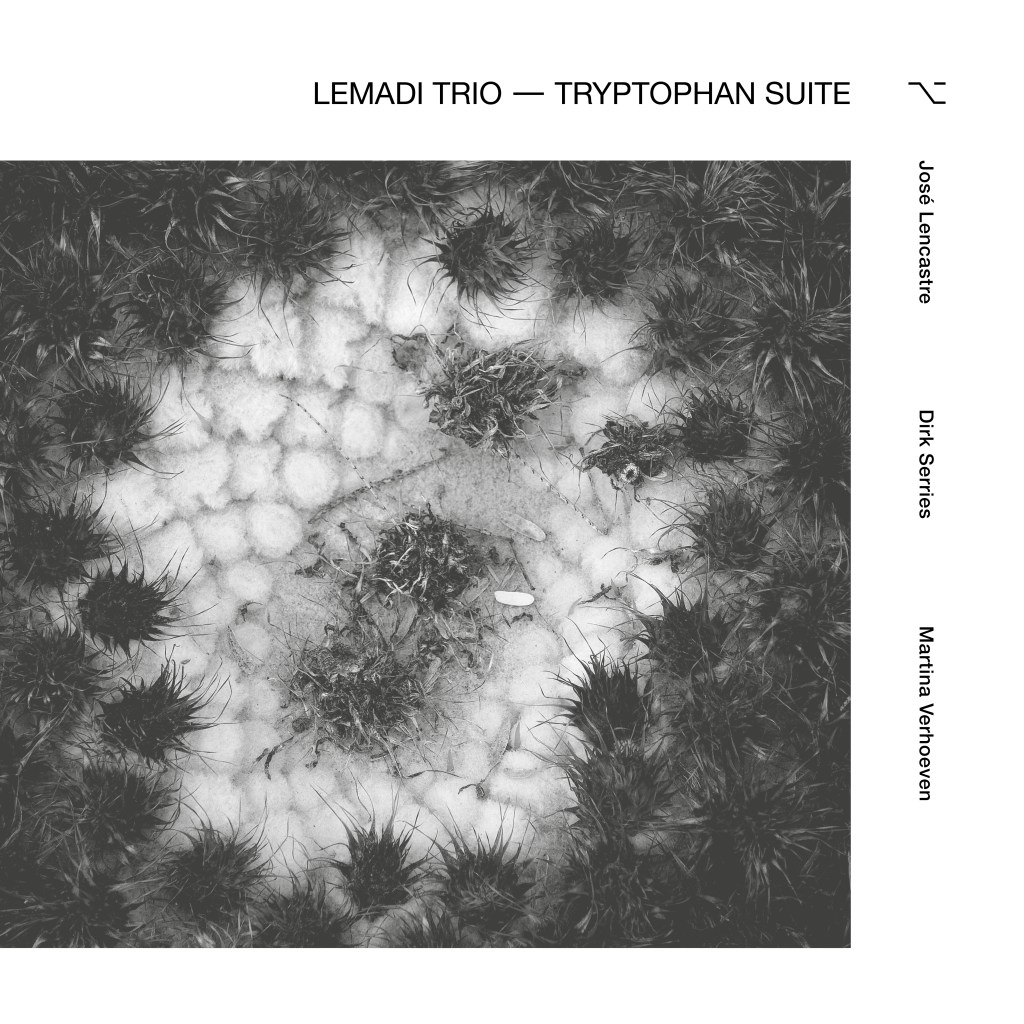
LEMADI TRIO – CANONICAL DISCOURSE “Lemadi Trio features Lencastre with Belgian pianist Martina Verhoeven (a gifted photographer who took the cover photo) and guitarist Dirk Serries (he and Verhoeven are partners in life in music). Canonical Discourse is the trio’s sophomore album, following Tryptophan Suite (A New Wave of Jazz Axix, 2023), and was recorded at Serries and Verhoeven’s home studio in Brecht in March 2024. The atmosphere is different from the trio’s debut album where Verhoeven played the vintage electric Crumar piano and leaned toward a chamber one. The four extended, free-improvised pieces deepen the slow-cooking, often fragile and sparse, but attentive and tension-filled dynamics of the trio, attuned to each sound and the most abstract timbres of the alto sax, archtop guitar and grand piano, with all the extended, breathing, bowing and percussive techniques. Lencastre provides the melodic core of these improvisations, contrasting the spiky guitar lines of Serries and the inside-the-piano percussive-resonant sounds of Verhoeven. A challenge and a treat for the ears.”
Frans De Waard’s VITAL WEEKLY just reviewed our 4 new releases. Traditionally in his own perculiar way, granted VITAL WEEKLY isn’t a webzine for free jazz or improvisation in general, but at least he keeps on giving the music a platform. This we can only appreciate. Our four releases are of course available through our bandcamp store.
Not for the first or last time, there is a lot of free improvisation coming our way. If we stop at Vital Weekly 1500, which is still very possible, that is no doubt one of the reasons. It can be sooner if I come across ‘Vital Weekly – leading publication for all things jazz’. What was never our primary interest, seems to have become one. There’s a label whose releases I like very much, and I started a modern composition division, which is not my thing and who asked me: ‘Why don’t you review all my releases?’. Suppose they’d open a country & western division. Would they expect me to move along? Would the readership of Vital Weekly expect this?
For a long time, Dirk Serries’ music was very much Vital Weekly music, with the likes of Vidna Obmana and Fears Falls Burning, but also some recent solo releases. However, for about ten years, Serries is also heavily into free improvisation and free jazz, and I reviewed many of his releases, if not all. This recent bunch sees him further down that road with many musicians he works with. I don’t think I heard his trio Transition Unit before, with Serries on archtop guitar, Jose Lencastre on alto, tenor saxophone, and Rodrigo Pinheiro on a grand piano. This is a conventional release in terms of instrument approach; each instrument sounds as it should be, especially the saxophone and the piano. The guitar is the oddball here, with Serries going all wild on the strings and the other two’s hecticness and nervousness. The saxophone takes the lead, and that’s not for the first time. Maybe it’s the way this instrument or the player’s personality (I don’t know Lencastre, so I am taking a wild guess here), but his playing is dominant all around, with Serries sometimes being a bit lost. Very free jazz, as much as I can make (the traditional liner notes by Guy Peeters no longer grace the covers of these releases) of this, and sound at 51 minutes enough for one day – I am taking these, as the doctor ordered, one a day. Each of the six pieces has an individual title, but they were challenging to tell apart.
Because Lencastre is also on another CD with Serries, it’s time for the Lemadi Trio on the second day. Lencastre only brought his alto saxophone to the Serries’ home studio on Match 9, 2024, with Serries on guitar and his partner Martina Verhoeven on piano. The saxophone is also the leading instrument, but the music is a bit different. Sure, there is a lot of improvisation here, too, but it’s sometimes with a different amount of chaos than with the Transition Unit. Especially Serries and Verhoeven do some spooky stuff on their instruments and what that is, I am not sure of, but it sounds good. The domineering saxophone is sometimes in the way of their playing, too loud, too much foreground. I say there isn’t the same amount of chaos, but that doesn’t mean it’s absent, it still is very much part of the fabric of the music. It’s the difference with Transition Unit, which I enjoyed most, mainly with the playing of Verhoeven and Serries.
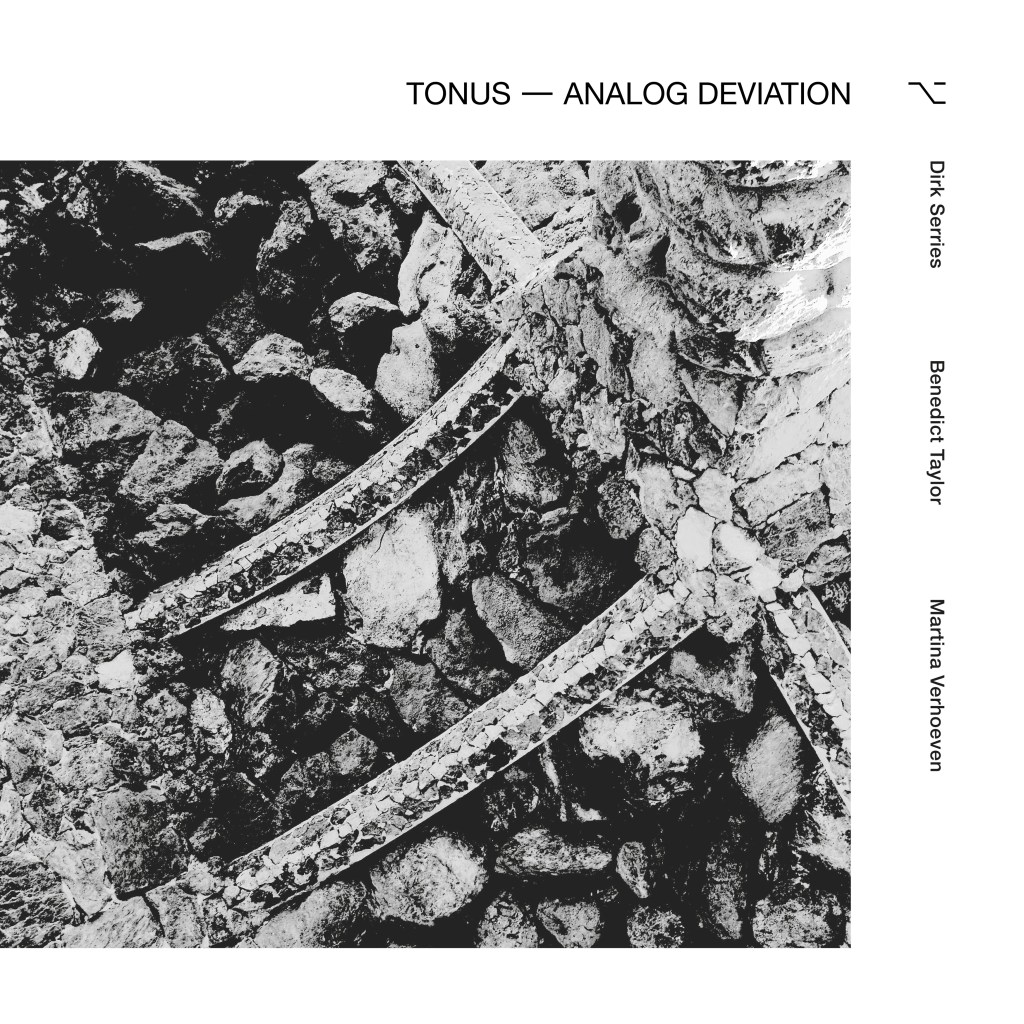
Verhoeven and Serries, this time on grand piano and archtop guitar, play with various people in an ad hoc ensemble called Tonus, incidentally, also the only one I saw live. On ‘Analog Deviation’, they play with Benedict Taylor on viola and broken fiddle. Spoiler alert: it is also the only CD without a saxophone. Also, a home recording from 2023, and they recorded two pieces, in total, 52 minutes of music. The concert I heard (in 2019) was an enjoyable, quiet affair, which might be what Tonus is about. After the at times violent chaotic moves of the previous two releases the silence of Tonus is a wealth to hear. Also, the non-domineering role of any instrument is interesting. This release has more of a conversation between three equal players. And, like any good conversation or discussion, there are moments in which things get heated, and people don’t listen, which leads to inevitable chaos. But with this trio, such a discussion works quite and there and they return to a safer ground of instrument exploration. There is little free jazz going on here and more free improvisation, with the instruments not always sounding as they are supposed to, which I always enjoy.
The most extensive lineup (or the only non-trio release) is the Martina Verhoeven Quintet, with Verhoeven on grand piano, Serries on guitar, Colin Webster on alto sax, Goncalo Almeida on double bass and Onno Govaert on drums. They played in Paradox, Tilburg, on 12 February 2023. Scratch what I said earlier about chaos, as this quintet takes chaos to the next level. Each of the instruments is played as it is supposed to be, and some of the players use other techniques – inside piano is something I may have heard here. They played 43 minutes, or perhaps that’s what is left after editing, and occasionally, they leave some room for the listener (present in concert and at home, listening to the CD) to grasp for breath before kicking off again with some more mayhem and destruction. I am sure jazz musicians don’t use these words, but that’s how it comes across. It is not my cup of tea, but once every now and month, this is something suitable and nice, offering another perspective on noise music.
Ken Waxman of JAZZ WORD (Canada) just wrote a lovely combined review on two releases (on A New Wave Of Jazz and Klanggalerie) which both features Dirk Serries on guitar. For best effect we’re keeping the review here intact. LEMADI TRIO’s Tryptophan Suite is available here, SERRIES/AMADO/LISLE’s The Invisible here.
Expanding his collaborations with other creative musicians here, Belgian guitarist Dirk Serries is part of two trios which each feature a different Portuguese saxophonist. Equally compelling, though recorded almost two years apart, The Invisible couples the guitarist with tenor saxophonist Rodrigo Amado, an Iberian veteran in numerous international combinations, plus regular Serries associate UK drummer Andrew Lisle. Tryptophan Suite on the other hand links Serries with alto saxophonist José Lencastre, who has performer with the likes of Carlos Zingaro, plus on electric piano, the guitarist’s long-time associate and spouse Martina Verhoeven.
The presence of a percussionist defines how each session evolves. Lisle’s drum ruffs, rumbles and rebounds plus cymbal clanks and scratches give the other two a shifting but solid foundation on which to express themselves. Even Lisle’s brief unaccompanied solo on the title track adds to the overall structure rather than focusing attention on itself. Often knitting together simple and repeated notes and patterns, the saxophonist and guitarist also create their own motifs, reflecting tempos and connections. Amado’s expressions range from the technical to the traditional. Throughout he stretches timbres with multiphonic slurs, doits and spiraling vibrations. while there are points where his output is more languid and linear. During those interludes half-swallowed tones. pauses and straight-ahead elaborations of songbook standards hover, but never long enough to be fully defined.
Still these characteristics are elaborated on the lengthy “Tapestry” , which also provides space for the string strategies Serries pursues throughout. Positioning himself between Lisle and Amado, his playing veers from powerful drones and metallic clanks to string-ringing and horizontal comping. On “Tapestry” these devices serve as challenges to reed motifs. As Amado’s slides from note-bending tonguing and emphasized honks to almost vibrato-less trills and nearly inaudible timbral smears, Serries provides the proper rejoinder, or pushes the other musicians with jagged frails or vibrant string stings to dedicated theme variations.
Without a percussionist, but adding a chordal instrument, 19 months later as the Lemadi Trio, it’s Serries whose tough strums provide the rhythmic bottom during two untitled improvisations. With Lencastre’s reed constructs encompass similar, if not more intense bitten-off split tones, altissimo cries and pinched whines as Amado, it’s often the guitarist’s string shredding and chunky strums which keep the broken octave program developing without the saxophonist dominating the aural real estate.
Not that he’s alone. Verhoeven main contributions may pivot towards gentle keyboard ripples, isolated note plinks and bright tonal patterns, but she sometimes breaks up the others dense expositions with energetic glissandi and staccato emphasis.
By the second part of the concert without lessening dynamism, the sequences become more reflective and settled, including multiplying brief silent pauses. The pianist adds stop/start bounces and wider, more regularized arrangements, allowing the guitarist to ease out of the rhythmic role, setting aside continuum creation for string rubs, twangs and woody frails. Reed emphasis is still harsh and aggressive, but as the pianist and guitarist reach a similar mixture of andante projection the resulting narrower focus unites strands at the conclusion. Serries seems determined to expose his guitar techniques in numerous situations. Yet these discs show how diverse the result from nearly instrumentally similar trios can be.





 A New Wave Of Jazz
You must be logged in to post a comment.