TRANSITION UNIT LIVE

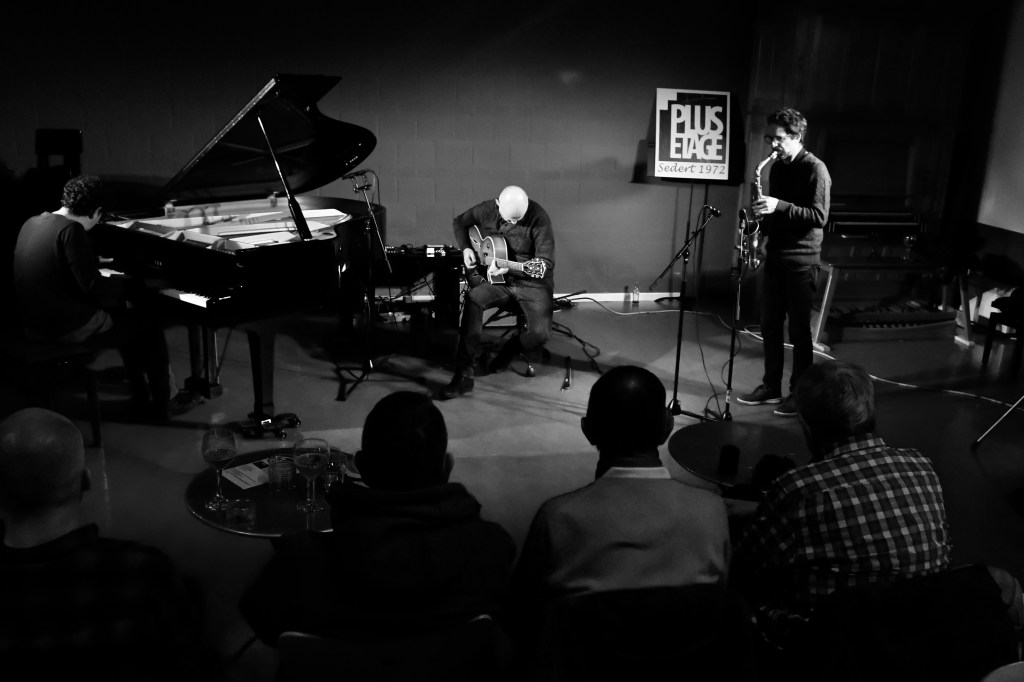
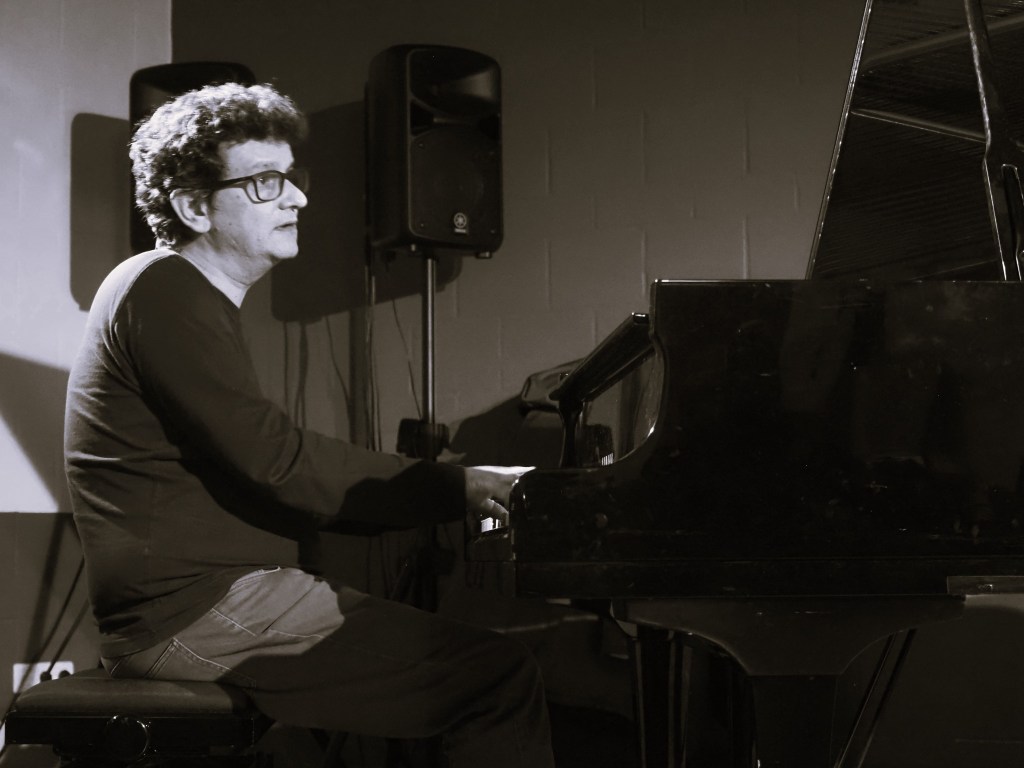
Last Saturday TRANSITION UNIT, the brand-new trio of RODRIGO PINHEIRO (piano), JOSÉ LENCASTRE (sax) and DIRK SERRIES (guitar), landed in jazzclub PlusEtage to promote their debut album FACE VALUE. Lovely audience, great vibe and Ben Taffijn of Nieuwe Noten was there and wrote a nice review. The photos are courtesy of Marcel Thomassen of PlusEtage and Jef Van den Broek.

“Enkele maanden geleden kwam het eerste album uit van Transition Unit, een trio bestaande uit saxofonist José Lencastre, pianist Rodrigo Pinheiro en gitarist Dirk Serries, op Serries’ label A New Wave of Jazz. Ik betoonde mij enthousiast over dit afwisselende ‘Face Value’. De opnames vonden overigens al in mei 2023 plaats in een studio in Portugal. Wat er sindsdien niet van kwam was optreden voor publiek, tot gisterenavond dus, als onderdeel van de serie concerten die Serries organiseert in samenwerking met de PlusEtage in Baarle-Nassau. Met deze twee musici in de buurt neemt Serries ook direct de kans waar om dezer dagen opnames te maken voor een tweede album.

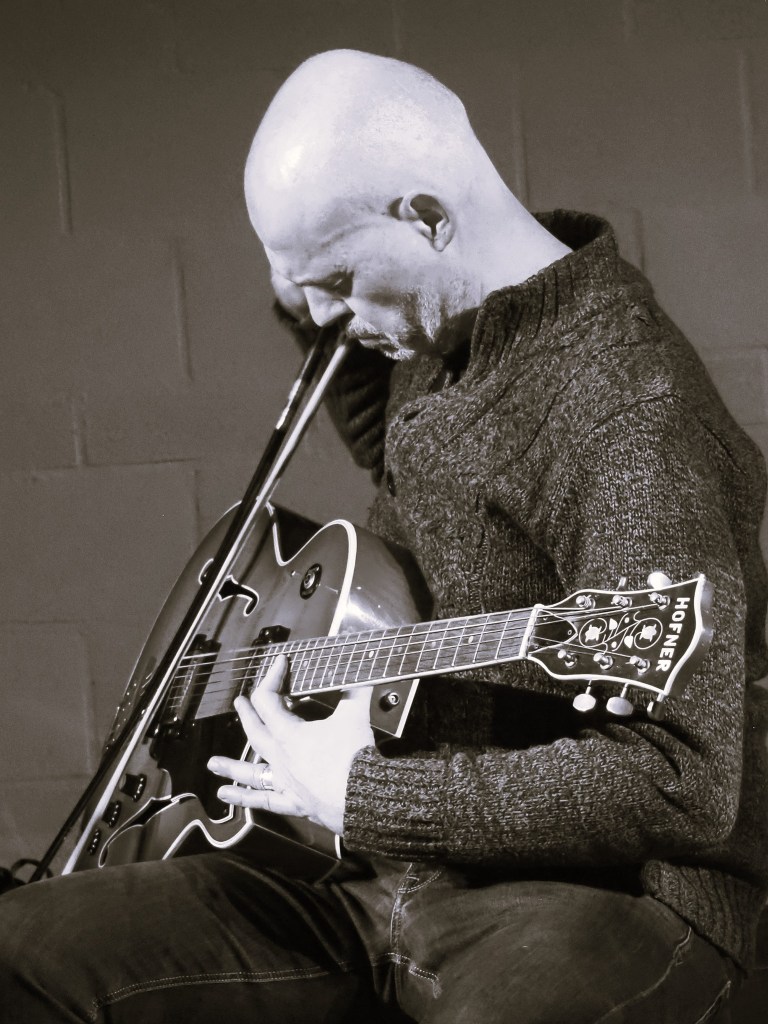
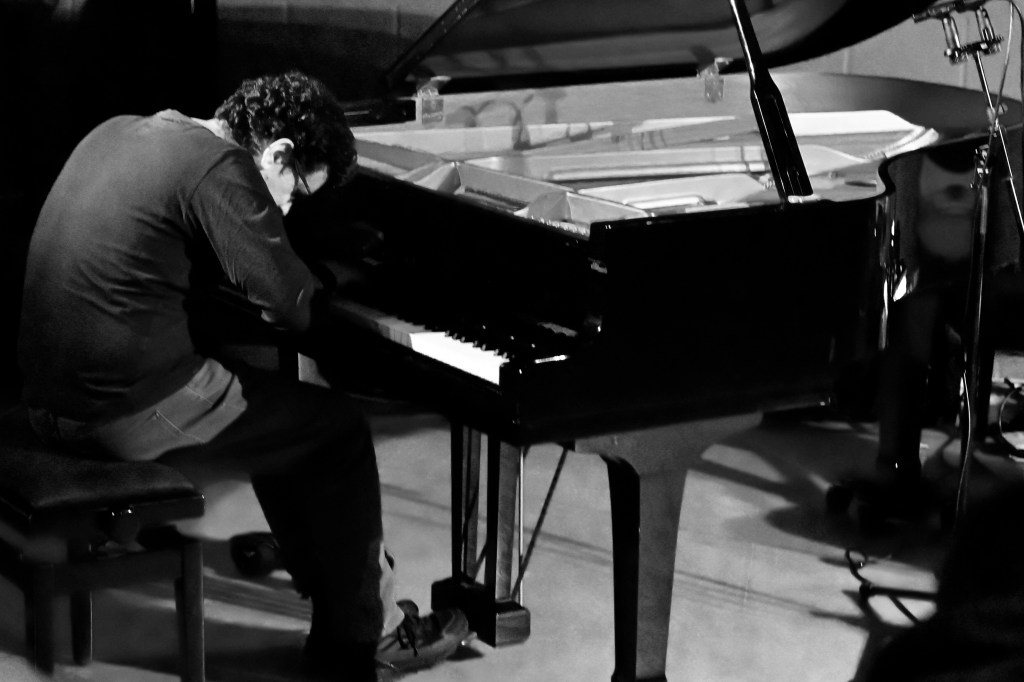
In mijn verslag over het eerste album vallen termen als “abstract”, “weerbarstig” en “onstuimig”, naast dat er sprake is van “uiterst ingetogen klanken”. Zelfs word ik zo nu en dan melodische patronen gewaar. Het zijn etiketten die ik één op één ook op dit concert kan plakken, zo blijkt al snel. Neem die eerste set, die vrij voorzichtig, verkennend van start gaat met Lencastre en Pinheiro, die elkaar vrij goed kennen en samen ook deel uit maken van José Lencastre’s nau quartet, iets dat je goed terughoort tijdens dit concert. Serries biedt ondersteuning aan het bouwwerk dat hier langzaam maar geleidelijk vorm krijgt. Pinheiro en Serries dragen zorg voor de bedding, waar Lencastre zijn vaak opvallend melodieuze patronen overheen legt. Soms loopt het tempo op en overheerst de ritmiek, waar Lencastre met zijn felle klanken dan nog maar net doorheen weet te breken, maar vaak gaat het er ook veel meer ingetogen aan toe.  Een opvallend moment in de eerste set doet zich ongeveer halverwege voor: Pinheiro en Serries stappen over op een wat slepende ritmiek, de tot op dat moment heersende abstractie te niet doend. Aanleiding voor Lencastre, de gehele avond te horen op zijn altsax, om een enigszins getormenteerde, maar aantrekkelijke melodie te blazen. De spanning loopt wat op, de ritmiek krijgt een nog sterker meeslepend karakter. Uiteindelijk blijft louter Pinheiro over, met enkele noten een brug slaand naar een wederom meer abstracte frase. En ook nu loopt de spanning op en is het met name Lencastre die opvalt met zijn heftig, sputterende spel, aangevuurd door Pinheiro wiens handen zich razendsnel over de toetsen bewegen en Serries die zijn gitaar met de strijkstok bewerkt, een geluid producerend dat, zoals ik eerder opmerkte, meer wegheeft van een contrabas dan van een gitaar.

Het begin van de tweede set lijkt op die van de eerste, al zijn het nu Lencastre en Serries die aftrappen. Lang duurt het ingetogen spel hier niet, al snel schiet het trio weer vol in de actie en spreiden Pinheiro en Serries de loper uit voor Lencastres doldwaze uitspattingen. Prachtig hoe deze drie musici elkaar hier opstuwen tot grote hoogte, volledig verdiept in hun spel. En ook hier is abstractie weer het codewoord, al wil zeker Lencastre nog wel eens richting de melodie bewegen. Zoals gezegd, het gaat er ook regelmatig veel minder heftig aan toe. Zo horen we in die tweede set een prachtig ingetogen dialoog tussen Pinheiro en Serries, met karige klanken vindt er een boeiend vraag- en antwoordspel plaats. En als Lencastre zich er uiteindelijk bijvoegt, doet hij dat met een vrij donkere, sonore klank, er alles aan doend om dit fragiele bouwwerk aan te vullen, in plaats van te verstoren. Een aantal duetten tussen Pinheiro en Serries verderop in deze set sorteren hetzelfde effect. Telkens vormen die ook weer de opmaat tot meer hectische frases. Eén daarvan valt vooral op en dat is die waarin Serries wederom naar zijn strijkstok grijpt. Nu trekt hij deze zo strak over zijn snaren dat het eerder klinkt alsof hij planken aan het zagen is dan gitaar aan het spelen. Het vormt de opmaat tot één van de meest heftige momenten tijdens dit concert, een wervelstorm aan klanken trekt er door de zaal.” Ben Taffijn/Nieuwe Noten

VITAL WEEKLY REVIEWS

Frans De Waard’s VITAL WEEKLY just reviewed our 4 new releases. Traditionally in his own perculiar way, granted VITAL WEEKLY isn’t a webzine for free jazz or improvisation in general, but at least he keeps on giving the music a platform. This we can only appreciate. Our four releases are of course available through our bandcamp store.

Not for the first or last time, there is a lot of free improvisation coming our way. If we stop at Vital Weekly 1500, which is still very possible, that is no doubt one of the reasons. It can be sooner if I come across ‘Vital Weekly – leading publication for all things jazz’. What was never our primary interest, seems to have become one. There’s a label whose releases I like very much, and I started a modern composition division, which is not my thing and who asked me: ‘Why don’t you review all my releases?’. Suppose they’d open a country & western division. Would they expect me to move along? Would the readership of Vital Weekly expect this?

For a long time, Dirk Serries’ music was very much Vital Weekly music, with the likes of Vidna Obmana and Fears Falls Burning, but also some recent solo releases. However, for about ten years, Serries is also heavily into free improvisation and free jazz, and I reviewed many of his releases, if not all. This recent bunch sees him further down that road with many musicians he works with. I don’t think I heard his trio Transition Unit before, with Serries on archtop guitar, Jose Lencastre on alto, tenor saxophone, and Rodrigo Pinheiro on a grand piano. This is a conventional release in terms of instrument approach; each instrument sounds as it should be, especially the saxophone and the piano. The guitar is the oddball here, with Serries going all wild on the strings and
the other two’s hecticness and nervousness. The saxophone takes the lead, and that’s not for the first time. Maybe it’s the way this instrument or the player’s personality (I don’t know Lencastre, so I am taking a wild guess here), but his playing is dominant all around, with Serries sometimes being a bit lost. Very free jazz, as much as I can make (the traditional liner notes by Guy Peeters no longer grace the covers of these releases) of this, and sound at 51 minutes enough for one day – I am taking these, as the doctor ordered, one a day. Each of the six pieces has an individual title, but they were challenging to tell apart.

Because Lencastre is also on another CD with Serries, it’s time for the Lemadi Trio on the second day. Lencastre only brought his alto saxophone to the Serries’ home studio on Match 9, 2024, with Serries on guitar and his partner Martina Verhoeven on piano. The saxophone is also the leading instrument, but the music is a bit different. Sure, there is a lot of improvisation here, too, but it’s sometimes with a different amount of chaos than with the Transition Unit. Especially Serries and Verhoeven do some spooky stuff on their instruments and what that is, I am not sure of, but it sounds good. The domineering saxophone is sometimes in the way of their playing, too loud, too much foreground. I say there isn’t the same amount of chaos, but that doesn’t mean it’s absent, it still is very much part of the fabric of the music. It’s the difference with Transition Unit, which I enjoyed most, mainly with the playing of Verhoeven and Serries.

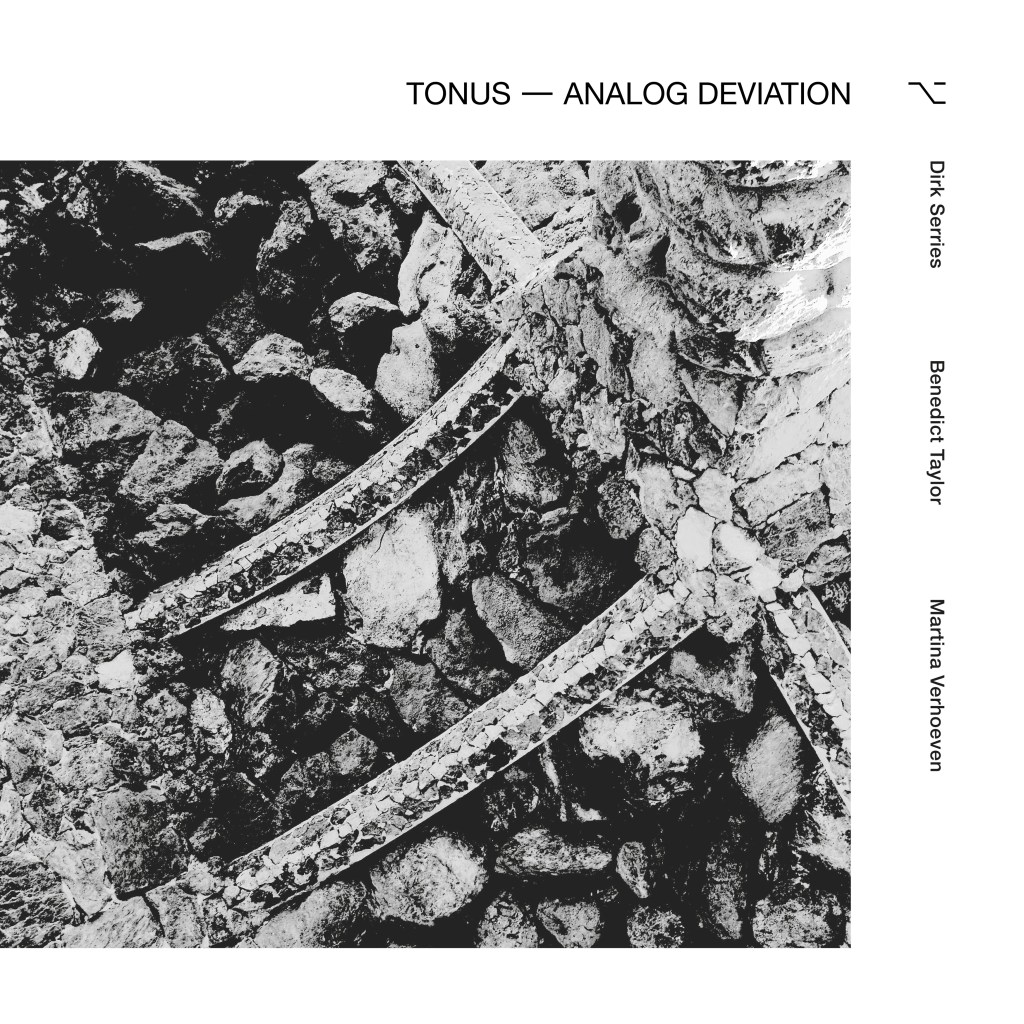
Verhoeven and Serries, this time on grand piano and archtop guitar, play with various people in an ad hoc ensemble called Tonus, incidentally, also the only one I saw live. On ‘Analog Deviation’, they play with Benedict Taylor on viola and broken fiddle. Spoiler alert: it is also the only CD without a saxophone. Also, a home recording from 2023, and they recorded two pieces, in total,
52 minutes of music. The concert I heard (in 2019) was an enjoyable, quiet affair, which might be what Tonus is about. After the at times violent chaotic moves of the previous two releases the silence of Tonus is a wealth to hear. Also, the non-domineering role of any instrument is interesting. This release has more of a conversation between three equal players. And, like any good conversation or discussion, there are moments in which things get heated, and people don’t listen, which leads to inevitable chaos. But with this trio, such a discussion works quite and there and they return to a safer ground of instrument exploration. There is little free jazz going on here and more free improvisation, with the instruments not always sounding as they are supposed to, which I always enjoy.

The most extensive lineup (or the only non-trio release) is the Martina Verhoeven Quintet, with Verhoeven on grand piano, Serries on guitar, Colin Webster on alto sax, Goncalo Almeida on double
bass and Onno Govaert on drums. They played in Paradox, Tilburg, on 12 February 2023. Scratch what I said earlier about chaos, as this quintet takes chaos to the next level. Each of the instruments is played as it is supposed to be, and some of the players use other techniques – inside piano is something I may have heard here. They played 43 minutes, or perhaps that’s what is left after editing, and occasionally, they leave some room for the listener (present in concert and at home, listening to the CD) to grasp for breath before kicking off again with some more mayhem and destruction. I am sure jazz musicians don’t use these words, but that’s how it comes across. It is not my cup of tea, but once every now and month, this is something suitable and nice, offering another perspective on noise music.